

Fall brings cooler temperatures and colorful trees throughout Philadelphia, but those same leaves can create serious roofing issues. Without regular fall roof maintenance, gutters clog, moisture builds up, and leaks appear. Cleaning your gutters, trimming trees, and installing leaf guard gutters helps. Read on for more practical tips.
Clean Your Gutters Regularly
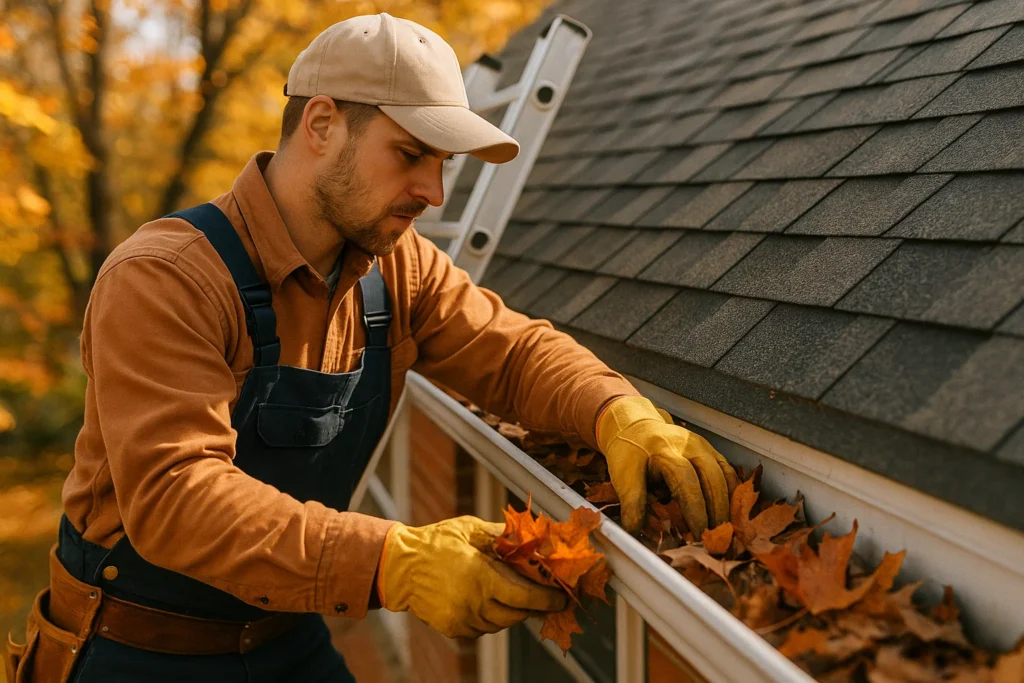
Clogged gutters are the leading cause of fall roof damage. When gutters fill with leaves, rainwater can’t flow properly. Instead, water seeps under shingles, rotting fascia boards, and causing leaks.
Make gutter cleaning part of your fall routine:
- Check and clean gutters every two to three weeks during leaf season.
- Use a garden hose or gutter scoop to remove buildup.
- Don’t forget downspouts; blockages there can cause overflow and roof leaks.
Pro Tip: Consider scheduling a professional cleaning or installing gutter guards to reduce maintenance and keep water flowing freely all season.
Trim Overhanging Branches
Overhanging branches can cause a lot of roof debris buildup. They drop leaves directly onto shingles and can scrape or puncture roofing materials during high winds.
Here’s why trimming matters:
- Keeps leaves and twigs from collecting on the roof
- Lowers the risk of damage from falling branches during wind or storms
- Discourages squirrels and other animals from nesting in gutters or attics
Trim branches 6 to 10 feet from your roof before heavy leaf fall. A local tree service can properly prune branches without harming the tree or your roof.
Install Leaf Guard Gutters or Leaf Screens
If you’re tired of cleaning gutters every few weeks, gutter guards or leaf screens are a smart upgrade. These systems block debris while allowing water to flow freely, a major win for roof protection.
Benefits of gutter guards include:
- Fewer clogs and less frequent cleanings
- Reduced risk of overflow and fascia damage
- Better performance for flat and low-slope roofs, where drains are prone to clogging
Professional installation ensures guards fit properly and don’t interfere with roof flashing or drainage systems.
Pro Tip: Choose aluminum or stainless-steel mesh guards for long-lasting performance, which is especially important in Philadelphia’s mixed fall weather.

Check Roof Valleys and Flat Roof Drains
Roof valleys and flat roof drains are magnets for leaves and debris. Left unchecked, they trap moisture that can lead to ponding water, membrane deterioration, and leaks.
What to do:
- Inspect roof valleys for leaf buildup after storms.
- Make sure drains and scuppers on flat roofs are clear and free-flowing.
- Schedule a fall roof inspection to spot early signs of wear or water damage.
Pro Tip: Even a small blockage can shorten the life of your roof. Regular maintenance helps prevent costly emergency repairs when winter storms arrive.
Inspect Flashing, Vents, and Skylights
Debris tends to gather around roof penetrations such as vents, chimneys, and skylights, which are prime spots for leaks. Over time, seals can loosen or crack, allowing moisture to seep in.
Inspection checklist:
- Clear leaves and dirt from around the flashing.
- Reseal joints if you notice any gaps or rust.
- Inspect skylights for cracked glass or loose caulking.
Pro Tip: Professional inspections can catch subtle issues early; older roofs often show wear around vents or skylights. This Old House recommends inspecting flashing and vents each fall before the first freeze.
Why Fall Maintenance Matters
Seasonal maintenance is more than just a cleanup; it’s an investment in your home. When homeowners ignore fall roof maintenance tasks, trapped debris can cause leaks that go unnoticed until the first freeze. Left unchecked, these issues can shorten the life of your roof and lead to expensive repairs. Proper fall preparation helps:
- Prevent winter water damage and ice dams.
- Extend the lifespan of your roof, gutters, and fascia.
- Reduce long-term repair costs and protect your home’s structure.
Pro Tip: Create a fall roofing checklist so you can track inspections, cleanings, and repairs year after year.
Schedule Your Fall Roof Maintenance Today
Protect your home before the first winter storm hits. Schedule your fall roof maintenance or leaf guard gutter installation with Union Roofing today. We proudly serve Philadelphia, Bucks County, Montgomery County, and Delaware County. Let us get your roof ready for the season ahead.
FAQs
Clean gutters every two to three weeks during peak leaf season. Homes near trees may need more frequent maintenance to prevent water overflow.
Yes. When properly installed, leaf guard gutters and mesh systems prevent debris buildup on flat or low-slope roofs. They keep drains clear and water moving.
You can remove light debris with a gutter scoop or blower. Stand on a stable ladder and avoid climbing onto a wet or icy roof. Call a professional for steep or multi-story homes.
Wet leaves trap moisture that seeps under shingles, leading to rot and mold. When gutters clog, water can back up beneath the roofline and into walls, causing interior leaks.
Early- to mid-fall is best, before the weather turns cold and icy. Scheduling the inspection early allows technicians to make repairs safely.
How often should I clean my gutters in the fall?
Clean gutters every two to three weeks during peak leaf season. Homes near trees may need more frequent maintenance to prevent water overflow.
Do leaf guards really work on flat roofs?
Yes. When properly installed, leaf guard gutters and mesh systems prevent debris buildup on flat or low-slope roofs. They keep drains clear and water moving.
Can I remove leaves myself safely?
You can remove light debris with a gutter scoop or blower. Stand on a stable ladder and avoid climbing onto a wet or icy roof. Call a professional for steep or multi-story homes.
How do leaves damage my roof?
Wet leaves trap moisture that seeps under shingles, leading to rot and mold. When gutters clog, water can back up beneath the roofline and into walls, causing interior leaks.
When should I schedule a fall roof inspection?
Early- to mid-fall is best, before the weather turns cold and icy. Scheduling the inspection early allows technicians to make repairs safely.