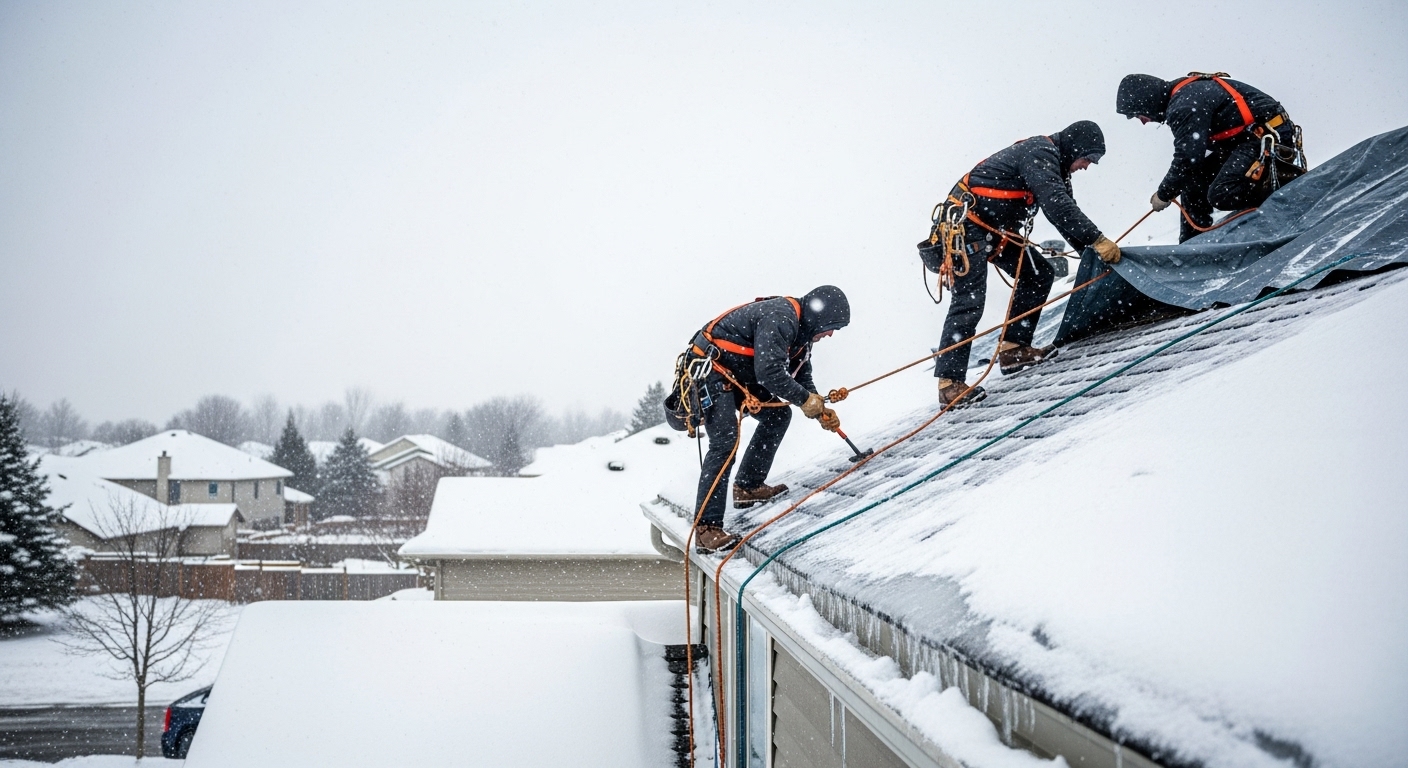
When the first frost rolls across Bucks County and Montgomery County, small issues can turn into serious problems almost overnight. Frost, early freeze thaw cycles, and sudden temperature drops put heavy stress on shingles, flashing, and gutters. Getting ahead of these changes protects your property and reduces the chance of unexpected cold weather emergencies.Below is a clear, helpful guide on what to check, how to prevent roof frost damage, and when to schedule winter roof repair with a licensed local pro.
Why Preparing Early Matters
Cold nights arrive fast in this part of Pennsylvania. Many roofs in Bucks and Montgomery Counties are older, surrounded by trees, or exposed to shifting temperatures that create early frost. When this frost melts and refreezes, shingles stiffen, flashing pulls away, gutters freeze, and small gaps become bigger problems.
A small weak spot in October can become a full roof leak in winter once freezing temperatures arrive. Preparing early means fewer surprises, fewer emergency calls, and a safer home or commercial building through the coldest months.
Local Conditions That Increase Roof Stress
Homes and buildings in Bucks and Montgomery Counties face some predictable challenges each fall.
- Many neighborhoods have large tree canopies that drop leaves and cause debris to clog gutters
- Older roofs are common, especially on historic homes and long standing commercial buildings
- Shaded roofs develop frost earlier and hold it longer
- Heavy winds along the river and open fields lift shingles and loosen flashing
These factors make fall the best time to prevent winter roof issues and reduce the chance of costly winter roof repair.
Top 7 Roofing Tips From the Roofing Experts

These steps help you avoid roof frost damage, winter leaks, and emergency roof repair winter calls when the weather turns.
1. Schedule a Winter Roof Inspection
Most problems that show up in December start forming in October. A winter roof inspection identifies trouble early, such as:
- Cracked or lifting shingles
- Soft spots on flat roofs
- Gaps around roof flashing winter areas
- Loose or aging chimney flashing winter section
- Early signs of roof leak in winter
- Risk zones for ice dams near gutters
A licensed pro can see things you cannot see from the ground. It is one of the most cost effective ways to prevent emergency work when temperatures drop.
2. Clear Gutters and Downspouts Before They Freeze
Frozen gutters are one of the fastest ways to create ice dams. When water cannot drain, it backs up under shingles and finds its way into your home.
Check for:
- Leaves packed into gutter channel
- Debris around downspout openings
- Sagging or pulling gutter sections
- Wet streaks on siding, which indicate overflow
Keeping gutters clear is one of the easiest ways to prevent ice dams and lower the risk of hidden water damage.
3. Improve Attic Ventilation
Good attic ventilation helps keep roof temperatures balanced. When warm indoor air rises into a poorly ventilated attic, it creates condensation, frost, mold, and weakened decking.
Proper attic ventilation helps:
- Maintain even roof temperatures
- Prevent moisture buildup
- Lower the pressure that causes ice dams
Commercial buildings with flat roofs benefit from ventilation checks as well, especially those with older insulation or air leaks.
4. Check and Upgrade Attic Insulation
Your attic insulation keeps warm indoor air where it belongs. When insulation is inadequate or uneven, warm air reaches the roof deck, melts frost, and contributes to ice dam buildup.
Signs your insulation needs attention:
- Uneven temperatures in upper rooms
- Higher winter utility bills
- Drafts around ceiling fixtures
- Snow melts quickly on only one part of your roof
Attic insulation and attic ventilation work together to prevent ice dams and limit winter roof repair needs.
5. Look Closely at Roof Flashing and Chimney Flashing
Flashing is one of the most common sources of winter leaks. Cold weather causes metal to contract. If flashing is already loose, gaps open up quickly.
Have a pro check:
• Chimney flashing
• Skylight flashing
• Dormer flashing
• Edge and valley areas
Flashing issues are a leading cause of roof leak in winter conditions, especially in older Bucks and Montgomery County homes.
6. Remove Debris From Roof Surfaces
Branches, leaves, and pine needles trap moisture. When frost hits, these areas stay wet longer and increase the chance of shingle damage. Properties in wooded areas of New Hope, Doylestown, Lansdale, and Blue Bell see this problem a lot.
Remove:
- Heavy branches
- Moss or algae
- Leaf piles
- Debris in roof valleys
Clean surfaces help your roof shed frost more evenly.
7. Inspect Flat Roofs on Commercial Buildings
Flat roofs freeze, thaw and refreeze in patterns that create ponding water. Before frost arrives, property managers should inspect:
- Ponding spots
- Membrane cracks
- Seams and edges
- Drain boxes
- Parapet wall flashing
Even small issues can become expensive winter roof repair jobs once snow and freezing rain arrive.
Helpful Pre Winter Roof Checklist
Use this list to quickly evaluate your roof before temperatures drop.
Roof Surface
- Look for missing shingles
- Check for soft spots
- Remove debris from valleys
- Inspect flat roof membranes
Gutters
- Clear leaves and debris
- Confirm downspouts drain properly
- Look for sagging or pulling
Flashing
- Inspect roof flashing winter areas
- Check chimney flashing winter sections
- Verify seals around vents and pipes
Attic
- Check attic ventilation
- Inspect attic insulation levels
- Look for signs of moisture or frost
Ground Level Signs
- Water stains on ceilings
- Peeling paint near roof lines
- Drips after light frost melts
If anything looks questionable, a professional winter roof inspection is the safest next step.
Understanding Ice Dams and How to Prevent Them

Ice dams form when warm attic air melts snow on the roof. That water moves toward the eaves, refreezes in the gutters, and forms a wall of solid ice. This forces water under shingles and creates hidden leaks.
To prevent ice dams:
- Improve attic insulation
- Check attic ventilation
- Keep gutters free from debris
- Seal air leaks in attic ceilings
If an ice dam forms, contact a professional for safe ice dam repair or ice dam steaming. Never chip at the ice with tools, since this damages shingles.
Common Winter Roofing Problems in Bucks And Montgomery Area
Once frost appears, you may notice:
- Frost lingering on only one section of the roof
- Discoloration or moisture stains on upper walls
- Frozen gutters that overflow
- Small drips after the sun rises
- Sudden cold spots in upper rooms
These signs often appear in older homes, shaded properties, and buildings with aging insulation.
When You Need Emergency Roof Repair in Winter
Call for emergency winter roof repair services. If you notice:
- Active leaks during snow melt
- Water dripping around chimneys
- Large sections of shingles lifting
- Sudden interior ceiling spots
- Ice dams pushing under shingles
Cold weather makes leaks spread quickly. Early action prevents structural damage.
Bucks and Montgomery County Considerations
Each neighborhood has its own challenges.
- Freeze thaw cycles hit older homes harder
- Tree cover creates early frost and blocks sun
- Wind exposure varies by neighborhood
- Many older properties lack proper ventilation or insulation
A local roofing team understands these patterns and can tailor repairs to your specific home or business.
Why Choose Union Roofing for Your Home This Winter
Union Roofing is a trusted local contractor serving Bucks County and Montgomery County with the experience needed to handle winter roof repair, ice dam repair, and cold weather emergencies.
Why homeowners and business owners rely on us:
- Local team with hands on winter repair and ice dam repair experience
- Fast emergency response
- Accurate leak detection
- Transparent estimates
- Licensed and insured service
Our winter service process:
- Inspection and priority list
- Written estimate with options
- Repair or mitigation work
- Final check and walkthrough
Final Thoughts
Frost arrives fast in Pennsylvania. These steps reduce the chance of roof frost damage, frozen gutters, ice dams, and costly winter roof repair emergencies. A professional inspection is the easiest way to catch problems early and protect your home.
Schedule your winter roof inspection with Union Roofing before the first frost arrives.
FAQs
Every chimney is different, so repair costs can vary. Roof pitch, access, flashing complexity, and the condition of the crown all factor in. But remember—most homeowners spend far less on preventative maintenance than on interior repairs after a leak. Investing in proper flashing and annual inspections is the best way to protect your home from water damage.
If the issue is at the roofline—flashing, shingles, or counter flashing—a roofer should handle it. For brick or mortar damage, a company that does both (like Union Roofing) is ideal.
Step flashing lies under shingles to guide water off the roof, while counter flashing seals into the chimney mortar to protect that joint. Both are essential for a watertight seal.
Yes. The crown protects the top of the masonry, and the cap keeps out rain, debris, and critters. They work together to prevent leaks.
We can perform most emergency repairs year-round, though certain sealants work best in moderate temperatures.
Once a year, ideally in the fall before freeze-thaw cycles begin.
How do I prevent roof frost damage and ice dams?
Improve insulation, increase ventilation, and keep gutters clean.
Can roof leaks be repaired in winter?
Yes. A technician can perform temporary or permanent repairs depending on the temperature and conditions.
Do heat cables help with ice dams?
They help in some cases but work best when combined with good insulation and ventilation.
How much attic insulation and ventilation do I need?
A pro can measure current levels and recommend upgrades that meet Pennsylvania energy standards.
What emergency roofing services do you offer in winter?
Leak detection, ice dam steaming, temporary patches, flashing repairs, and more.
GBP Post
Winter Roof Repair Pros
Stop roof frost damage before it spreads. Our team handles inspections, winter roof repair, and ice dam issues across Bucks and Montgomery County. Stay ahead of winter trouble.