Cold weather often brings uncertainty for homeowners, especially when it comes to roofing concerns. Snow, ice, and freezing temperatures can make it difficult to know whether roof issues should be addressed right away or postponed until spring.
As a result, many common beliefs about winter roofing persist, even when they are not entirely accurate. This guide breaks down the most common winter roofing myths and explains what homeowners in Pennsylvania and New Jersey should actually know when colder months arrive.

Why Winter Roofing Myths Exist
Many winter roofing myths come from a mix of seasonal fear, outdated information, and understandable safety concerns. Homeowners often assume cold weather automatically makes roofing work unsafe or ineffective. In reality, modern roofing practices and materials have evolved significantly.
Professional guidance matters during winter because local climate conditions, roof design, and material type all play a role in what can be done safely and effectively.
Common winter roofing myths vs facts:
- Myth: Roofing work cannot happen in winter
Fact: Many repairs and replacements are possible with proper planning - Myth: Cold temperatures permanently damage roofing materials
Fact: Materials perform differently but remain reliable when installed correctly - Myth: Snow always damages roofs
Fact: Snow alone is often harmless without underlying issues - Myth: All roof problems can wait until spring
Fact: Some winter issues worsen if left unaddressed
Understanding what is and isn’t possible during winter helps homeowners make more confident decisions about their roof.
Myth #1 – You Can’t Replace a Roof in Winter
One of the most common concerns homeowners ask is whether replacing a roof during winter is even possible. In many cases, the answer depends on weather conditions rather than the season itself.
Winter roof replacement can be done when temperatures fall within manufacturer guidelines and when conditions are dry and stable. Roofing professionals monitor temperature, wind, and moisture closely before proceeding. While extreme cold or active snowfall may cause delays, milder winter days often allow work to continue safely.
For homeowners wondering can you replace a roof in winter, the key factor is not the calendar but whether conditions allow for proper installation and safety measures.
Myth #2 – Cold Weather Ruins Roofing Materials
Another widespread belief is that cold weather permanently damages roofing materials during installation. This myth stems from older materials and outdated methods that were less adaptable to temperature changes.
Today, modern shingles and roofing systems are designed to handle colder environments. Roofing professionals use winter roof installation facts to adjust storage, handling, and installation timing. Adhesives may take longer to seal, but this does not mean they fail or lose effectiveness.
When asking does cold weather affect roofing materials, it is important to understand that experienced installers account for these factors rather than ignoring them.

Myth #3 – Roof Repairs Should Always Wait Until Spring
Delaying repairs during winter can sometimes create larger problems. Small leaks, loose flashing, or damaged shingles may seem minor at first but can worsen with freezing and thawing cycles.
Homeowners often wonder is winter a bad time to replace a roof or handle repairs. The reality is that waiting can allow moisture to penetrate deeper into the roof system. This can lead to insulation damage, mold growth, or structural concerns once temperatures rise.
Understanding what happens if you delay roof repairs in winter helps homeowners make informed decisions rather than assuming postponement is always safer.
Myth #4 – Snow Always Means Roof Damage
Snow on a roof does not automatically signal a problem. Most residential roofs in Pennsylvania and New Jersey are built to handle typical snow loads. Issues arise when snow combines with ice buildup or underlying drainage problems.
Snow and ice roof damage is more likely when ice dams form along roof edges. These occur when heat escapes from the home, melts snow, and allows water to refreeze near the eaves. Over time, trapped water can back up under shingles.
Winter roof damage prevention often focuses on insulation, ventilation, and timely inspections rather than snow removal alone.
Myth #5 – Roofers Don’t Work in the Winter
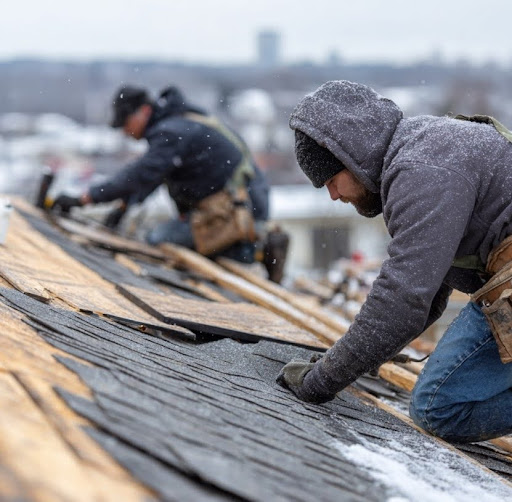
Many homeowners assume roofing companies shut down during colder months. In reality, professional crews often remain active throughout winter, adjusting schedules based on weather conditions.
Do roofers work in the winter? Yes, but with additional safety protocols. Crews monitor forecasts, use specialized safety equipment, and limit work during hazardous conditions. Roof repair in cold weather is approached carefully, prioritizing both worker safety and installation quality.
Winter schedules may be more flexible, but that does not mean work stops entirely.
When Winter Roof Repairs Are Necessary
Some roofing issues should not be ignored simply because it is winter. Active leaks, missing shingles, sagging areas, or interior water stains are signs that require professional evaluation.
Emergency repairs focus on preventing further damage rather than completing full replacements immediately. Preventative repairs, on the other hand, address vulnerabilities before storms or freeze cycles worsen existing problems.
Knowing the difference helps homeowners decide when to seek help without feeling pressured.
Getting Professional Advice During Winter
If you have questions about your roof during winter, a professional inspection can help clarify what needs attention now and what can safely wait.
Homeowners in Pennsylvania and New Jersey may benefit from speaking with a local roofing professional who understands regional winter conditions and can provide guidance based on the current state of the roof.