When water appears near your ceiling or upper walls, most homeowners assume the roof is to blame. That assumption is often incorrect. Roofline leak causes are frequently tied to siding, windows, or flashing rather than the shingles themselves. Understanding where water actually enters your home can help prevent costly repairs and recurring issues.
Roofline leak causes often go beyond shingles. Water can enter where the roof meets siding, around windows, or through damaged flashing. Identifying the true source is critical, as leaks in these areas can travel and appear far from where the problem begins.
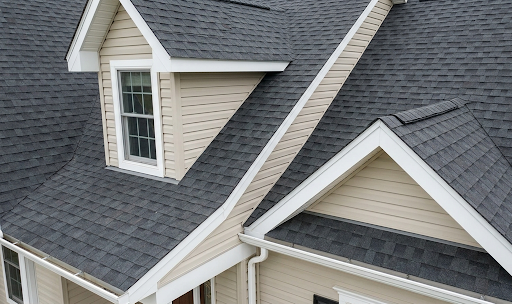
What Is the Roofline and Why Does It Matter
The roofline is the area where your roof meets the vertical surfaces of your home, including siding, walls, and window frames. It is one of the most complex zones on any exterior because multiple building systems meet in a confined space.
A water leak where the roof meets a wall is especially common because that joint depends on several layers working together. Even a small gap or improper seal at this intersection can allow moisture to enter. In Pennsylvania, New Jersey, and Delaware, freeze-thaw cycles and seasonal storms place additional stress on these areas throughout the year.
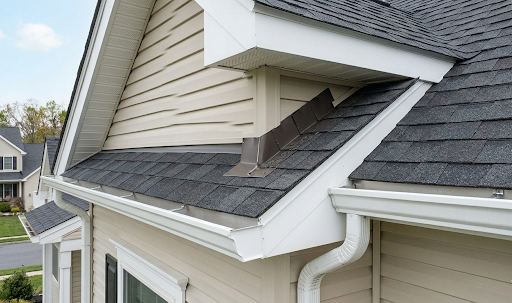
Common Roofline Leak Causes
Not all roofline leaks originate from the same place. Water intrusion in this area typically falls into four categories: roofing material failure, siding problems, window installation issues, and flashing breakdown. Each behaves differently and requires a different repair approach. Misidentifying the source often leads to ineffective repairs and continued leakage.
Understanding how water enters the roofline from these areas is the first step toward an accurate exterior wall leak diagnosis. The sections below explain each category to help you identify what may be affecting your home.
Siding-Related Leak Culprits
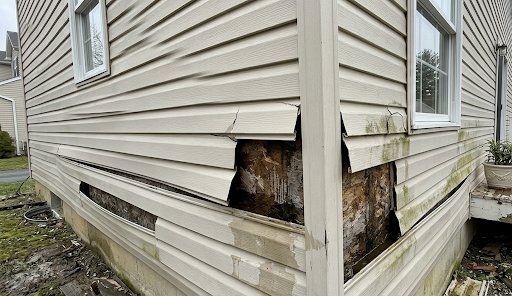
A siding leak near the roofline is a common but often overlooked source of water intrusion. When siding panels are improperly installed, gaps can form between sections or around trim boards. Water finds those gaps and moves behind the siding, where it remains hidden until damage becomes visible.
Missing or improperly installed house wrap is another major factor. House wrap acts as a secondary moisture barrier behind the siding. Without it, or if it is damaged or poorly installed, water can reach the underlying structure. Over time, this may lead to rot, mold, and structural damage beyond the original entry point.
Cracks in older siding materials, particularly around nail holes and butt joints, can also allow water to enter. Because water runs downward and follows the path of least resistance, visible interior damage often appears several feet below where the siding failure actually occurred. This makes a siding leak near the roofline so difficult to diagnose without a thorough exterior inspection. Our siding services address installation issues and help correct these hidden problems.
Window Leak at the Roofline
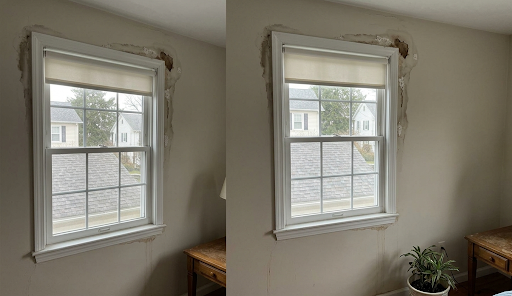
A window leak at the roofline is one of the most commonly misidentified issues in exterior repair. Windows installed in this area are highly susceptible to water intrusion, especially if proper flashing is missing above the window frame. Without a correctly sloped metal cap or head flashing, water runs directly down the wall and collects at the top of the window before entering the structure.
Seal failure around the window perimeter is equally problematic. Caulk and weatherstripping degrade over time, particularly under the UV exposure and temperature swings common in the Mid-Atlantic region. Once those seals crack or shrink, water can enter the wall cavity more easily.
For example, a homeowner may notice a ceiling stain near a second-floor window after heavy rain. The instinct is to check the roof above that spot. In many cases, however, the actual entry point is a failed head flashing or a cracked caulk joint at the top of the window frame. Water travels inside the wall before becoming visible as a stain.
Roof Flashing Leak Causes at Wall Intersections
Roof flashing leak causes are among the most frequently misdiagnosed issues in exterior repair. Flashing is the metal material used to seal joints where the roof meets vertical surfaces such as walls, chimneys, and dormers. It is one of the most critical components in preventing water intrusion, and also one of the most common failure points.
Step flashing is installed in overlapping sections along the edge where the roof meets a sidewall. When pieces are improperly sized, nailed too tightly, or corroded, water bypasses the seal and enters the wall system. Counter flashing, which sits over the step flashing and is embedded into the mortar or siding, must overlap correctly to form a complete barrier. When it pulls away from the wall or is not properly secured, rain can enter through the gap.
Chimney and roof leak causes often intersect at the flashing level. A chimney penetrates the roof at an angle, creating multiple joints that require proper sealing. Mortar deterioration, rust, and poor installation are common causes of chimney-related leaks. What appears to be a roofing problem near the chimney is often a flashing failure that can be corrected without replacing shingles.
Our roofing services include thorough flashing inspection and replacement as part of every exterior assessment.
How Water Enters the Roofline (Why the Source Is Misleading)
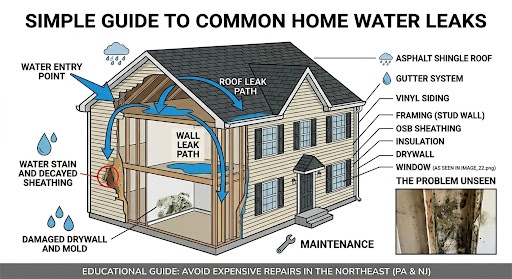
Understanding how water enters the roofline helps prevent misdiagnosis. Water follows gravity, but it can also travel along framing members, insulation batts, vapor barriers, and sheathing panels before becoming visible inside your home. The visible damage and the actual entry point are rarely in the same place.
A small breach in the flashing can allow water to move several feet along structural elements before appearing inside. A crack in the siding three feet above a window can produce a stain that appears to be coming from the window itself. This is why attempting an exterior wall leak diagnosis based on interior stains often leads to incorrect repair.
Getting the diagnosis right requires tracing the water path from the interior damage backward to the exterior surface where moisture is actually entering. That process demands experience with how all three systems, roofing, siding, and windows, interact at the roofline.
Signs You Have a Roofline Leak Problem
Several signs indicate that water is entering through the roofline area. Recognizing them early reduces the scope and cost of repairs.
- Ceiling stains or discoloration near exterior walls or below the roofline
- Water stains or dark streaking on interior walls
- Peeling or bubbling paint on walls or ceilings
- Mold or mildew near wall-to-ceiling joints
- Moisture or dripping near window frames during or after rain
- Soft or spongy drywall along upper walls
If you notice these signs, scheduling a roof inspection can help address the issue early.
Why Proper Diagnosis Matters
Replacing a roof due to a ceiling stain is a common and expensive mistake. If the problem is failed flashing or a window seal, a new roof will not solve the problem. The leak may continue despite the replacement.
Proper diagnosis also protects against repeated patch repairs that never address the root cause. Filling cracks in siding without checking the house wrap or re-caulking a window without fixing the flashing often provides only short-term results. A complete exterior wall leak diagnosis that evaluates all systems together is the only reliable path to a lasting fix.
How Union Roofing Identifies and Fixes Roofline Leaks
Union Roofing uses a full exterior approach to leak diagnosis. Rather than inspecting only the roof surface, our team evaluates all systems at the roofline, including siding condition, window flashing details, step and counter flashing, and penetrations such as chimneys or vents.
After identifying the source, we provide clear repair-versus-replacement recommendations based on the actual condition of each component. If a siding section needs to be pulled back to reseal the house wrap and re-flash a window, we complete the work correctly rather than applying a surface-level patch that will fail in the next storm season.
Homeowners in Pennsylvania, New Jersey, and Delaware trust our team because we focus on clear explanations and practical solutions.
Schedule a Roofline Leak Inspection
If you notice water stains, peeling paint, or unexplained moisture near your roofline, it is best to act early. The longer a leak goes unaddressed, the greater the risk of mold growth and structural damage.
Schedule a roofline inspection with Union Roofing to receive a full exterior evaluation. The team understands how siding, windows, and roofing systems work together.
Prefer to start with a cost estimate? Contact Union Roofing to request an estimate, and a member of our team will respond promptly.