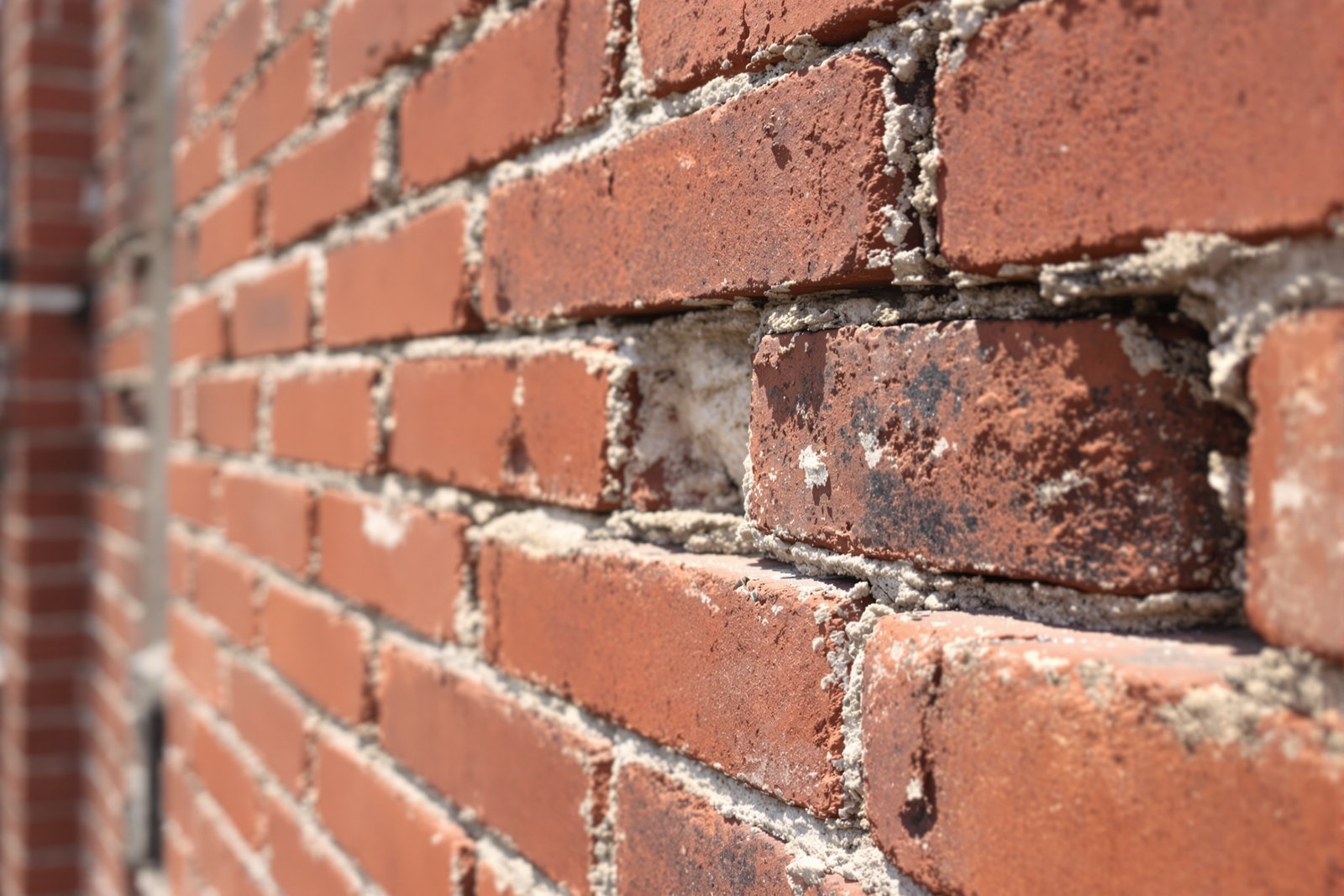
Philadelphia is a brick city. Rowhome fronts, party walls, chimneys and parapets all depend on the mortar between the bricks, and that mortar wears out long before the brick does. This guide covers typical national cost ranges, what moves the price on a Philadelphia home, and why to book before the freeze.
For the work itself, see our page on brick pointing in Philadelphia.
Brick Pointing Cost in Philadelphia: The Short Answer
Brick pointing is usually priced by the square foot. Typical national ranges from HomeAdvisor run about $3 to $15 per square foot for repointing and $5 to $25 for tuckpointing, or $400 to $2,500 to repoint a 100-square-foot section. Your actual price depends on height, access and the condition of the joints.
Cost guides don’t all agree, so here is what they say:
| Job | Typical national range (source) |
|---|---|
| Repointing, per square foot | $3 to $15 (HomeAdvisor); $8 to $12, at the higher end if scaffolding is needed (Fixr) |
| Tuckpointing, per square foot | $5 to $25 (HomeAdvisor, Bob Vila); $3 to $7 for the first 10 feet of height, closer to $10 above that with scaffolding (Fixr) |
| 100 sq ft section, repointed | $400 to $2,500, $1,450 on average (HomeAdvisor) |
| Chimney repointing | $700 to $2,200 (HomeAdvisor) |
| Chimney tuckpointing | $500 to $2,500 (Bob Vila) |
| Whole house repointing (2,000 sq ft of brick walls) | $6,000 to $30,000 (HomeAdvisor) |
| Mason labor | $50 to $100 per hour; the same guide also quotes $70 to $110 (HomeAdvisor) |
Sources: HomeAdvisor, Fixr and Bob Vila cost guides.
These are national ranges, not our prices
These figures come from national cost guides and are not Union Roofing’s prices. HomeAdvisor notes that labor is roughly 80% to 90% of the cost, so your price depends on what a mason finds on site. We offer free, no-obligation estimates for all of our brick pointing services.
Pointing, Repointing and Tuckpointing: What’s the Difference?
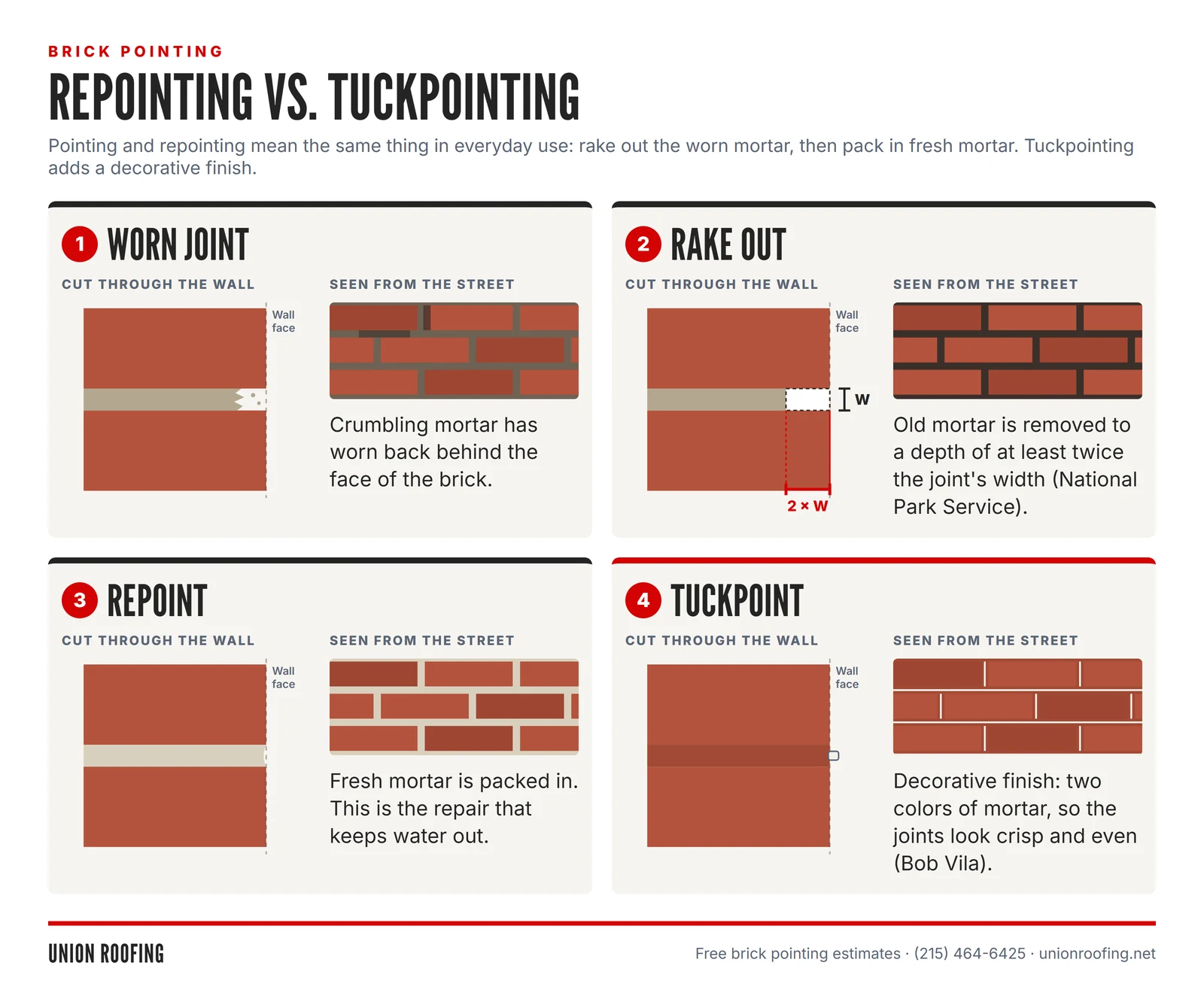
Pointing and repointing mean the same thing in everyday use: raking out worn, crumbling mortar from the joints and packing in fresh mortar. Tuckpointing is a more decorative version. As Bob Vila puts it, it uses two different colors of mortar, so the joints look crisp and even. On our own jobs, we restore the mortar and apply a thin ribbon of putty along the joints for a polished look.
People often say “tuckpointing” for any repointing job, so ask what each quote includes. Repointing is the repair that keeps water out; tuckpointing adds a finished look, which is one reason HomeAdvisor prices it slightly higher than plain repointing.
What Drives the Price of Brick Pointing?
Square footage is the biggest factor, because masons generally price by the square foot. After that, height and access, the condition of the joints, the mortar needed to match your existing work and any brick replacement decide where your job falls in the range. Two jobs of the same size can be priced very differently.
| Factor | How it affects the price |
|---|---|
| Wall area | A chimney or one section of wall costs far less than a full facade. |
| Height and access | For chimneys, HomeAdvisor says masons may charge extra past 8 feet; Bob Vila expects at least $10 per square foot on high surfaces. |
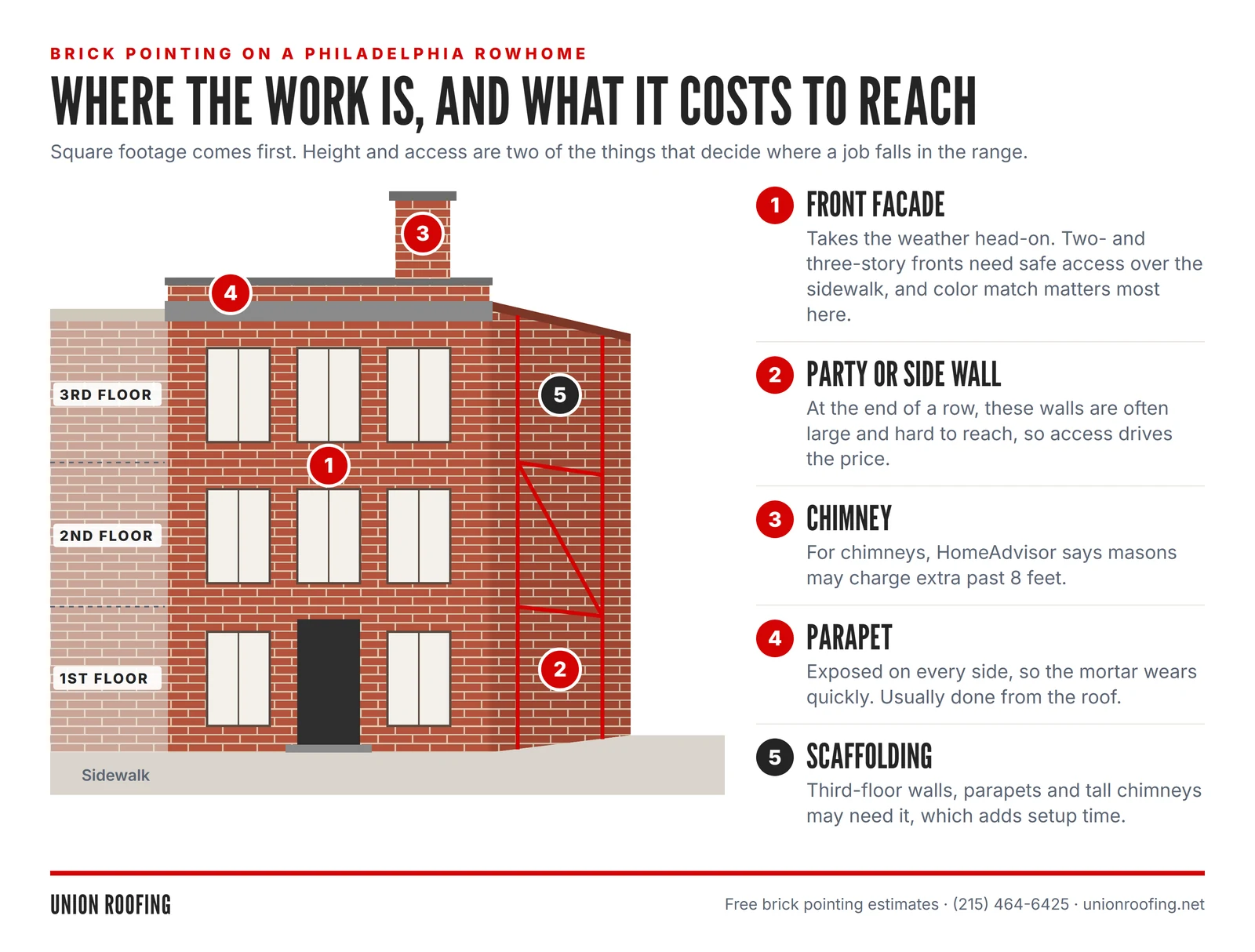
| Scaffolding | Third-floor walls, parapets and tall chimneys may need scaffolding, which adds setup time. |
| Joint condition | Deeply eroded joints take longer to clean out and refill. |
| Mortar and color match | Matching an older home’s original mortar takes more care than a standard mix. |
| Brick replacement | Cracked or spalled bricks are replaced on top of the pointing. |
| Time of year | HomeAdvisor says emergency work in winter or heat waves will likely cost more. |
Rowhome Facades, Party Walls and Chimneys: Typical Philadelphia Jobs
Brick pointing in Philadelphia often comes down to three kinds of job, each with its own access and cost questions.
Front facades
The front takes the weather head-on and is the wall everyone sees. Two- and three-story fronts need safe access over the sidewalk, and a good color match matters most here.
Party walls and side walls
At the end of a row, or where the house next door is gone, a side or party wall may now face the weather. These walls are often large and hard to reach, so access drives the price.
Chimneys and parapets
Chimneys and the parapet walls around flat rowhome roofs are exposed on every side, so their mortar wears quickly. The work is usually done from the roof and often ties in with flashing.
A chimney with worn mortar often has worn flashing too. See our chimney repair service, and our guide to chimney flashing repair cost in Philadelphia if your chimney is also leaking.
Why Does Old Brick Need the Right Mortar?
Older brick can be softer than modern brick, and older homes were often laid in lime-based mortar. The National Park Service’s Preservation Brief 2 says repointing mortar should be softer or more permeable than the brick, no harder than the historic mortar, and matched to it in color, texture and tooling. Mortar that is too hard can damage the brick.
Mortar made before the late 19th century used lime as its main binder, the brief explains. Mortar is meant to be the sacrificial part of the wall: it gives a little as the wall moves and lets moisture dry out. A hard, Portland-heavy mortar is stronger than soft old brick and won’t give, so the brick takes the stress instead; the Park Service warns this can cause cracking and spalling (brick faces popping off) that cannot be repaired easily.
If you own an older rowhome, ask any mason who quotes the job:
- What mortar mix will you use, and is it softer than my brick?
- How will you match the color and texture of my existing mortar?
- How will you remove the old mortar without damaging the edges of the bricks?
Can You Repoint Brick in Fall or Winter?
Fall can be a good time to repoint while temperatures hold, but winter usually isn’t. Mortar has to cure without freezing. The Brick Industry Association sets 40°F as the point where cold-weather precautions are needed. Most masons won’t repoint when temperatures are expected to drop below about 40°F. In Philadelphia, that means booking in the fall or planning for spring.
The National Park Service gives a similar window, wall temperatures between 40 and 95°F, and HomeAdvisor suggests spring or fall, when daytime temperatures stay between 40 and 90°F for at least 24 to 72 hours.
Timing matters because of Philadelphia’s freeze-thaw winters. Water in an open joint freezes, expands and pushes the gap wider, then thaws and lets more water in, so crumbling joints get worse over a winter. If you spot a problem after the cold sets in, get it looked at and schedule the work for the first suitable weather.
What Are the Signs Your Brick Needs Repointing?
The usual warning signs, according to the National Park Service, are disintegrating mortar, cracks in mortar joints, loose bricks, damp walls and damaged plaster. If you see any of them on a facade, party wall or chimney, it’s time for a closer look. Walk around your home and check for:
- Crumbling or sandy mortar Mortar rubs out of the joint when you scratch it.
- Recessed joints The mortar has worn back well behind the face of the brick.
- Cracks or open gaps Look in the joints, especially around windows, chimneys and parapets.
- Loose or spalling bricks Brick faces flaking or popping off.
- Damp interior walls Look for damp patches or peeling, stained plaster on the inside of an outside wall.
- Efflorescence White, chalky salt deposits on the brick, a sign that water is moving through the wall.
Find the source of the water first. The same brief says causes such as leaking roofs or settlement should be dealt with before repointing, or the new mortar will deteriorate too. On a rowhome, check the roof, parapets and chimney flashing at the same time.
Should You Repoint Brick Yourself or Hire a Pro?
A few loose joints on a low garden wall can be a reasonable weekend project. Facades, party walls, chimneys and parapets are different: they are high, they keep water out of your home, and older brick is easily damaged. For those, it’s worth hiring an experienced mason.
Where DIY can work
- Small areas you can reach safely from the ground
- Garden walls, steps and other low, non-critical brickwork
- Newer brick laid in modern mortar
When to call a pro
- Anything above the first floor, or on a chimney or parapet
- Older homes with soft brick and lime-based mortar
- Walls with loose or spalling bricks, or damp inside

The job is slower than it looks: the National Park Service says old mortar should be removed to a depth of at least twice the joint’s width, and warns that power tools in unskilled hands “can be disastrous for historic masonry, particularly soft brick.”
Brick Pointing Cost FAQs
How much does it cost to repoint a brick house?
Typical national ranges from HomeAdvisor run about $3 to $15 per square foot for repointing, or $6,000 to $30,000 for a house with 2,000 square feet of brick walls. Many rowhome jobs cover one facade, wall or chimney, and height, access and joint condition change the price, so get an on-site estimate.
How often should brick be repointed?
Mortar typically lasts around 20-30 years. If you notice cracks or crumbling mortar sooner, have it repointed to prevent further damage.
Is tuckpointing the same as repointing?
Not quite. Repointing replaces worn mortar with fresh mortar. Tuckpointing goes a step further: the mortar is restored and a thin ribbon of putty is applied along the joints for a polished look. People often use the words interchangeably, so ask what each quote includes.
Can you repoint brick in cold weather?
Not easily. Mortar has to cure without freezing, so most masons won’t repoint when temperatures are expected to drop below about 40 degrees F. In Philadelphia, book in the fall or plan for spring.
Does chimney repointing stop leaks?
It can stop water getting in through failed mortar joints, but chimney leaks can also come from worn flashing where the chimney meets the roof, or from a cracked chimney crown or a missing cap. Have the whole chimney checked so the repair fixes the real source.
Is the estimate for brick pointing free?
Yes. Union Roofing offers free, no-obligation estimates for all of its brick pointing services in Philadelphia and the surrounding counties. Call (215) 464-6425 to book yours.
About Union Roofing
Union Roofing is a family-owned roofing contractor based at 12260 Townsend Road in Northeast Philadelphia (19154). Founded in 1981, it has over 40 years of experience working with brick and mortar in the Philadelphia area, is fully licensed and insured, and holds GAF Master Elite status. Union handles residential and commercial brick pointing, including brick repointing, chimney repointing and tuckpointing, across Philadelphia and Bucks, Montgomery and Delaware Counties, and in Burlington, Camden, Gloucester, Atlantic and Cape May Counties in South Jersey. Learn more about Union as a roofing contractor in Philadelphia.
Get a Free Brick Pointing Estimate Before the Freeze
We offer free, no-obligation estimates for all of our brick pointing services. Whether it’s a rowhome front, a party wall or a chimney, we’ll take a look, walk you through what needs to be done and answer any questions you have. Call us or send us a message to book your estimate.