
Roofing Types Compared: Materials for Homes & Commercial Buildings in PA & NJ
Not sure which roofing material is right for you yet? You’re in the right place. This is a comparison-first hub for every roofing type Union Roofing works with, from asphalt shingles to flat commercial membranes. Skim the table, read the quick takes, and click into the material that fits your building. Each roofing type below links to a dedicated page if you want more depth. Union Roofing serves homeowners and property owners across Philadelphia, Pennsylvania, and South Jersey.
Roofing Types at a Glance
| Roofing Material | Residential / Commercial | Best Fit |
|---|---|---|
| Asphalt shingles | Residential (sloped) | Cost-conscious homeowners who want a familiar, practical option |
| Metal roofing | Residential & some commercial | Long-term durability and weather resistance |
| Slate roofing | Residential (historic / high-end) | Premium homes that can support the weight and cost |
| TPO roofing | Commercial (flat / low-slope) | Reflective single-ply membrane for commercial buildings |
| EPDM roofing | Commercial (flat) | Rubber membrane with a long track record |
| PVC roofing | Commercial (flat) | Buildings that need stronger chemical or grease resistance |
| Modified bitumen | Commercial (flat) | Durable multi-layer flat roofing system |
Before you compare colors, brands, or warranties, start with your roof’s shape. A steep-slope residential roof usually calls for asphalt shingles, metal, or slate, which shed water quickly. A flat or low-slope roof needs a membrane system like TPO, EPDM, PVC, or modified bitumen, built to handle slower drainage over larger surfaces. Putting the wrong material on the wrong roof leads to drainage problems, premature wear, and costly repairs.
Residential Roofing Materials
Most homes in Pennsylvania and New Jersey have steep-slope roofs. These three materials cover the vast majority of residential projects.
Asphalt Shingle Roofing
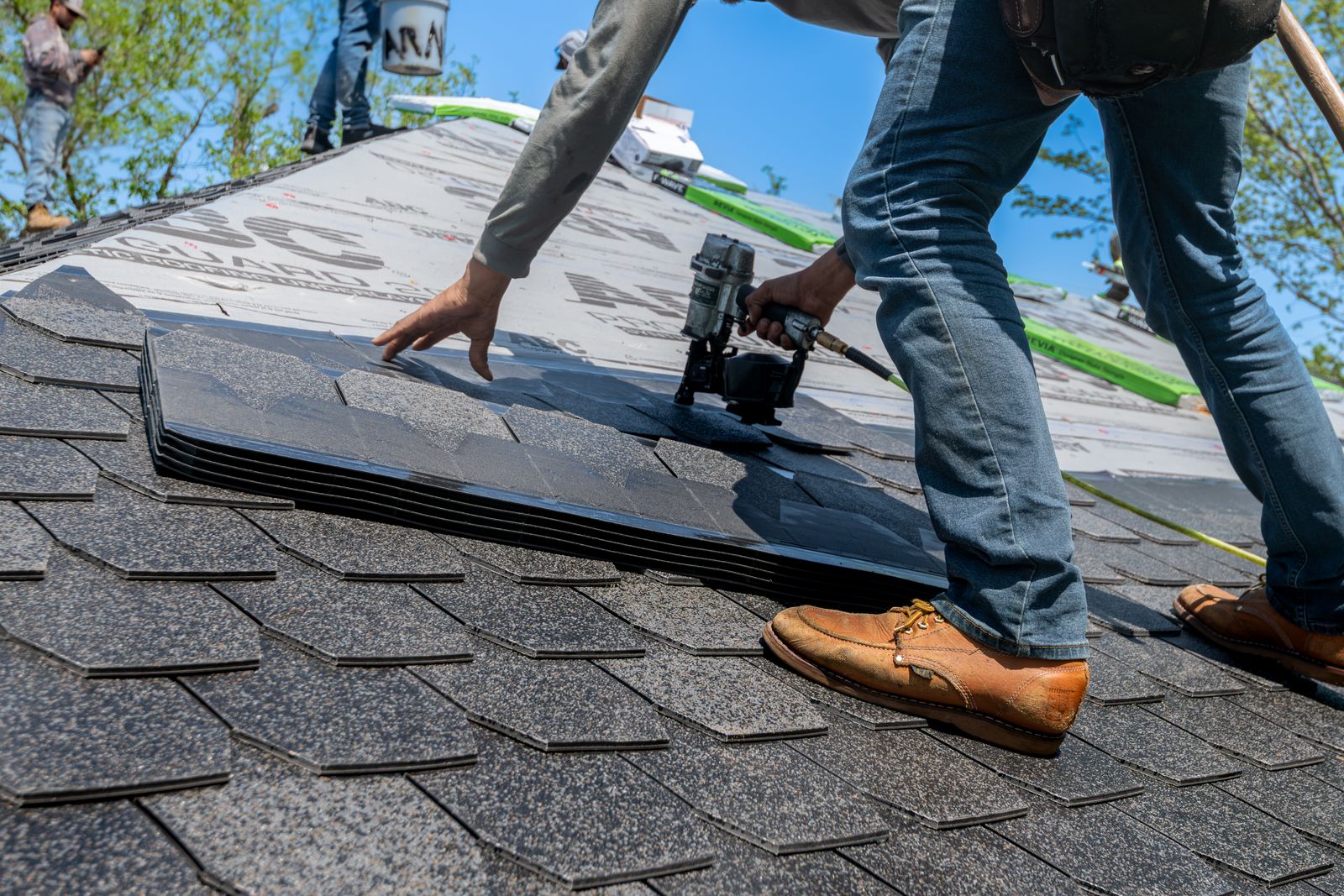
Asphalt shingles are the most common residential roofing material in the region. They’re familiar, widely available, and usually more budget-friendly than slate or metal. They work best on sloped roofs where you want a balance of affordability, appearance, and repair flexibility, and architectural shingles improve curb appeal over older three-tab styles. A good fit if you want a practical, affordable option, a wide range of colors and styles, or you may sell within a few years. See Union Roofing’s asphalt shingle roofing page to compare shingle options.
Metal Roofing
Metal roofing is valued for durability, weather resistance, and long-term performance, and depending on the design it suits both homes and certain commercial properties. It costs more upfront than asphalt but can last significantly longer with proper installation and maintenance, which makes it a strong option if you plan to stay in your home for years or want strong performance in high winds and heavy rain. It isn’t right for every home, though. Some neighborhoods, historic homes, or HOAs favor asphalt or slate. Learn more about metal roofing.
Slate Roofing
Slate is a premium material known for its exceptional lifespan and distinctive look, often installed on historic homes and luxury properties where architectural character matters. The tradeoff is weight and cost: slate is much heavier than asphalt and requires adequate structural support plus experienced installation. It’s a good fit if your home already has slate, the structure can carry the weight, and your budget allows for a premium, exceptionally long-lasting roof. Union Roofing’s slate roofing team can tell you whether slate is the right call or another material is more practical.
Commercial & Flat Roofing Materials
Commercial buildings usually have flat or low-slope roofs with rooftop equipment, drainage systems, and much larger surfaces, so the material selection is different. The most common commercial flat roofing systems are TPO, EPDM, PVC, and modified bitumen.
TPO Roofing
TPO is a single-ply membrane often installed on commercial flat roofs. It’s typically white or light-colored, which helps reflect sunlight and reduce heat absorption in warmer months, making it a strong fit for retail buildings, warehouses, offices, and mixed-use properties. See Union Roofing’s TPO roofing page for a deeper look.
EPDM Roofing
EPDM is a rubber membrane with a long history in commercial roofing. It’s commonly black, highly flexible, and often installed on flat or low-slope roofs. It’s a solid choice when you want a proven flat-roof system and don’t require a white reflective surface, though it can absorb more heat than lighter membranes, so building use and climate matter. Learn more about EPDM roofing.
PVC Roofing
PVC is another single-ply membrane, used where chemical resistance, grease resistance, or stronger seam performance matters, so restaurants and industrial facilities often consider it. Union Roofing’s PVC roofing team can help you compare PVC against TPO and EPDM.
Modified Bitumen
Modified bitumen is a multi-layer flat roofing system for commercial properties. When properly installed, it generally withstands foot traffic better than some single-ply membranes, making it a good option for buildings where maintenance personnel regularly access the roof. Union Roofing’s commercial roofing services cover all of these flat-roof systems.
Residential vs. Commercial Roofing
| Category | Residential Roofing | Commercial Roofing |
|---|---|---|
| Common slope | Usually steep-slope | Often flat or low-slope |
| Common materials | Asphalt, metal, slate | TPO, EPDM, PVC, modified bitumen |
| Primary concern | Curb appeal, lifespan, leak protection | Drainage, membrane performance, rooftop equipment |
| Installation | Smaller crews, shorter timelines | Larger scope, more planning and detail |
| Maintenance | Seasonal inspections and repairs | Regular checks of drains, seams, penetrations |
How to Narrow Your Options
The right roofing material should match your building, not just your budget. A few quick rules of thumb:
- Pre-1940s or historic-style home? Look at slate first, then synthetic slate if weight or budget is a concern.
- Cost-conscious with a standard steep-slope roof? Start with asphalt shingles.
- Planning to stay in the home for decades? Metal often pays back its higher upfront cost over time.
- Flat commercial roof? Look at TPO or EPDM first; consider PVC if you need grease or chemical resistance.
Still weighing it up? Ask yourself: is the roof steep-slope or flat, residential or commercial? How long will you own the property? Are there HOA, historic, or local requirements? Is energy efficiency a priority? A lower upfront price doesn’t always mean lower long-term cost, and a higher-end system isn’t always necessary. The goal is the right system for your property.
Still Not Sure? Get a Free Roof Inspection
The fastest way to narrow your options is to have someone look at the actual roof. With over 40 years of experience across Greater Philadelphia and South Jersey, Union Roofing will inspect your roof’s slope, structure, decking, drainage, and flashing, then recommend a material based on what your building really needs, not a guess. We’re licensed, insured, family-run, and financing is available. No pressure, just a clear next step.
Frequently Asked Questions
What are the most common roofing types?
The most common roofing types are asphalt shingles, metal, slate, TPO, EPDM, PVC, and modified bitumen. Asphalt, metal, and slate are typical on sloped residential roofs, while TPO, EPDM, PVC, and modified bitumen are widely used on flat commercial roofs.
Which roofing material lasts the longest?
Slate generally offers the longest lifespan when installed on a structure that can support its weight. Metal can also last considerably longer than asphalt shingles. For commercial flat roofs, lifespan depends on the material, drainage, installation quality, and ongoing maintenance.
What is the best roofing material for a flat roof?
Flat and low-slope roofs usually need a membrane system such as TPO, EPDM, PVC, or modified bitumen. The best choice depends on the building’s use, drainage requirements, budget, expected foot traffic, and environmental exposure.
Is residential roofing different from commercial roofing?
Yes. Residential roofing usually involves pitched roofs with asphalt, metal, or slate. Commercial roofing generally involves flat or low-slope systems, larger roof areas, rooftop equipment, drainage systems, and membrane materials.
What roofing materials does Union Roofing install?
Union Roofing installs and services both residential and commercial roof systems across Philadelphia, Pennsylvania, and South Jersey, including asphalt shingle, metal, slate, TPO, EPDM, PVC, and modified bitumen. Contact Union Roofing to schedule a roof inspection or request an estimate tailored to your property.